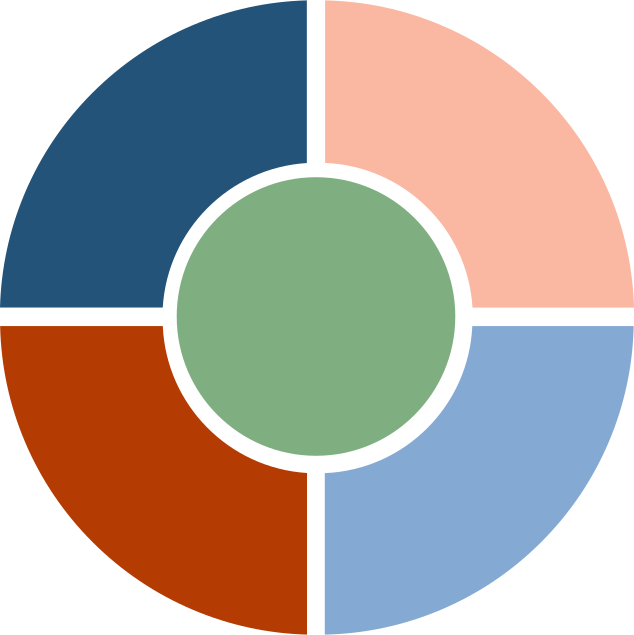
Seven UK organisations working in early childhood have spent years building their practice. This framework draws on their learning about how change happens and the vital role that ‘backbone’ or convening organisations play in making it stick – a role that is often missing from place-based work.




Practice Framework
The gap we’re trying to close
Good services often work in isolation. Programmes end before change has had time to take root, and the whole system shaping a child’s life is rarely anyone’s direct responsibility to fix.
Real change comes from sustained, collective effort - building local systems around a community’s long-term interests, with that community as the architect, not just the recipient.
What is a ‘backbone’
Backbone organisations are the glue of place-based change. They bring the right people and organisations together around a shared ambition, and plan from the start for how the change will stick.
They take on different roles around the ‘wheel’, but each one keeps the voice and experience of children and parents at the centre of the work and coordinates the collective effort.
How we made it and how to use it
The framework draws on hours of interviews, site visits and partner conversations across seven organisations and engagement with the international research evidence . It’s an honest account of what this work looks like, offered as a learning tool for practitioners, funders and policymakers who want to understand what makes it effective and sustainable. Every example comes from early childhood, but the practices apply to place-based change in general.
Who’s behind it
This framework was co-produced by Place Matters with organisations who have deep experience in place-based approaches to early childhood: A Better Start Blackpool, Bradford Birth to 19, Nottingham Trent University, Reach Foundation, Right to Succeed, Save the Children, and Thrive at Five. It is supported by a Rapid Realist Review of national and international evidence by Dartington Service Design Lab.
How to read this framework
Every part of this framework is described through three lenses. We structured it this way because honest accounts of place-based work are rare, accounts that name what's actually being done, explain why it works (or doesn't), and show how you'd know when it's working. This framework tries to hold all three together.


What we do
The activities:
What backbone organisations and their partners actually do day to day

Why it works
The mechanisms:
Why those choices hold up, and the conditions that explain why the same choice can fall flat somewhere else

How we know it’s working
The outcomes:
What you'd actually notice changing: the early signs that something's shifting, and the differences that last